 NeuroNest
Is sensory processing difficulty the same as autism?
No. It is common in autistic children, but many children without autism have sensory difficulties too.
About this therapy
Some children are over- or under-sensitive to what they feel, hear, see, or how they move. They might cover their ears at everyday sounds, avoid messy play, crave spinning and crashing, or barely notice bumps and scrapes. Sensory integration therapy helps their nervous system process this information more comfortably.
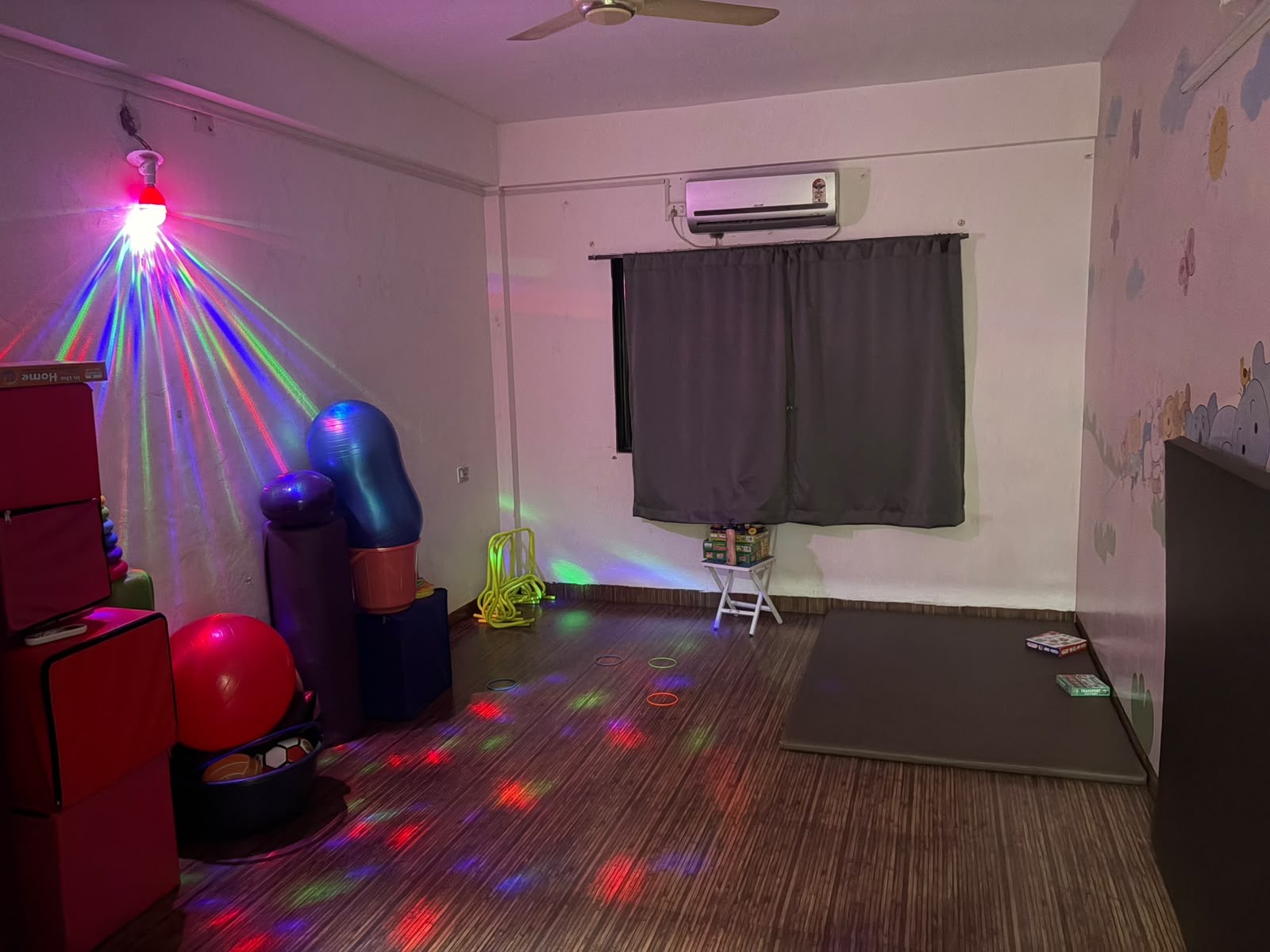
Sessions take place in our therapy room with balls, soft blocks, mats, hoops and adjustable lighting, in a planned way that feels like play.
In a session
Every plan is built around the person in front of us, but most sessions include these.
Understanding how your child responds to different sensations.
Movement, touch and light activities in the therapy room.
Strategies that help your child settle or wake up as needed.
A set of activities for home and school.
Families ask
No. It is common in autistic children, but many children without autism have sensory difficulties too.
A personalised set of activities spread through the day to help your child stay calm and focused.
Lighting is one of the tools we use to add or reduce visual input, depending on what your child needs.
Under the same roof
Tell us what you have noticed. We will suggest where to start.